


How mobile batch grain driers have changed
 I recently came across a book called Drying and Storing Combinable Crops by K. A. McLean, it was published in 1980. A small section (one and half pages in fact) is dedicated to mobile batch grain driers. It is a fantastic indicator of the changes in the UK market in the last 30 years. It also offers some very good advice that is still as true today as it was back then. I will briefly reflect on some of the more interesting points it raises.
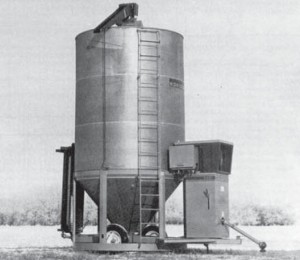
When the book was written Seedarwas starting to produce their first prototype machines and the UK market was dominated by the likes of Moridge and Bentall. The author describes these new mobile batch grain driers:
One popular range of batch units has a capacity of 7 – 18 tonne. They are most frequently driven via tractor PTO shafts but can be equipped with electric motors.
Times have certainly moved on in terms of batch capacity. The largest available capacity in 1980 now being the most common capacity of all new mobile grain driers in the UK. Furthermore, todays largest capacity machines now have a batch capacity of up to 60 tonnes. The preferred choice of drive has also changed, many now preferring electric drive to the more traditional PTO drive. This change has been partly caused by the ever increasing demand for drier automation.
While some things have changed, some advice is timeless and still as pertinent today:
Drier capacity can be increased by eliminating the cooling period and performing this necessary function elsewhere. Many factors influence the throughput of any drier, but with batch driers the time needed for filling and emptying is of prime importance.
These are both fantastic pieces of advice and are key considerations when specifying a mobile batch grain drier. We have advised on several grain drying and storage set-ups that have significantly increased their daily output by cooling outside the drier. Solutions have included using a refurbished continuous flow grain drier for cooling and on-floor cooling options. Filling and emptying is still of ‘prime’ importance, especially with the growing trend in continuous batch grain drying installations. With this in mind Seedaroffer a huge variety of loading and unloading options as well as bespoke design.
The most pertinent change though is the prominance given to mobile batch grain driers. In 1980 they warranted a short mention in the section on high temperature grain drying. Now this position is very much changed as a result of significant increases in mobile batch grain drier outputs, vast improvements in their specification and farmers being increasingly shrewd investers in machinery. These changes have resulted in the rapid growth of the mobile grain drier market in the last 30 years and will fuel the continued growth forecast for the future. Mobile grain driers are now providing drying capacity for more farms than at any point in the past and have become an important piece of machinery on farms throughout the UK.
22 July 2010 John McArthur Drier Options Tags: Continuous flow grain driers, Grain drying, Mobile batch grain drier, Grain driers, Drive, Grain drying industry