


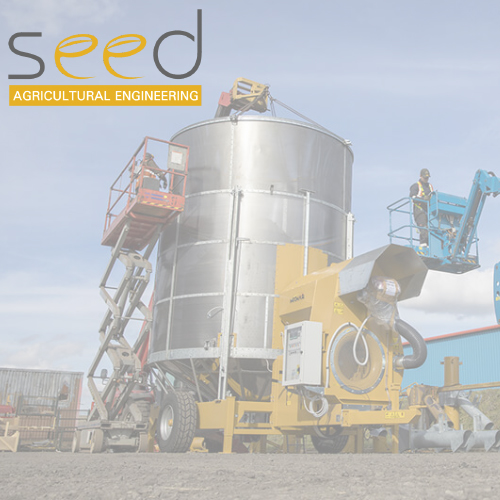
SeedarGrain Drier Maintenance – Dust Control
 Grain drier maintenance is crucial it ensures safe and efficient drying. Failure to clean the drier during harvest will increase the likelihood of faults, resulting in the loss of precious time.
Limiting dust around a recirculating grain drier is a difficult business. The Seedargrain drier features many dust control measures, such as solid screens and bubble top auger and an optional aspirator. These do reduce dust emissions but around a grain drier will always create a dusty environment. Low level maintenance is essential to maximise efficiency and safety in these conditions.
With this in mind we have prepared a quick guide to some of the key areas to keep an eye on.
To remove dust or other unwanted fines from the drier use either compressed air or a brush. Checks should be made regularly, checking at each change of crop would be a minimum. If a build up of dust or fines is seen when working around the drier it is always best to deal with it straight away.
Checks should include the following key areas:
- Control panel – dust and electronic components do not mix. Ensure the control panel door is closed when the drier is operating. If dust does get into the panel make sure when the drier is shut-down it is thoroughly cleaned out. Be careful not to alter any settings when doing this.
- Riello burner – Do not operate the drier without the burner cover in place. Ensure that the air valves and air adjustment piston are free from dust, again being careful not to alter any settings.
- Electric motors – Ensure that the motors grill and ventilation passages are free from dust and any other material to avoid overheating
- Screen cleaner chute – check it is clear so dust and screenings can pass through the pipe
- Intake auger – straw or barley awns can bridge the gaps on the protective grill and slow down the driers loading rate. Keep the auger clear of these to ensure efficient loading. Also ensure any moisture that may be in the intake auger is removed before loading
- The main hopper – do not allow significant amounts of dust or straw to build up on any areas inside the drier, this is generally limited due to the grain recirculating. Oats are particularly bad for build up of dust and straw in the drier.
- The bottom boot – at the very base of the main hopper, ensure that this area is kept free from any build up of crop, dust or fines, especially if the drier is open to the elements
- The plenum chamber – again do not allow a build up of dust or fines in this area, also ensure that the agitator gearbox breather plug does not become blocked
- General chassis – it is a good practise to keep the chassis, furnace, fuel tank and hopper structure free from dust. This will reduce potential risks and also improve the working environment around the drier.
To receive email updates on new blog content just click here
27 August 2011 John McArthur News Tags: Grain drying, Aspirator, Dust, Oats, Straw