


Mobile batch grain driers and grain moisture testing
 This time of year we are always occupied with helping new customers to get the best from their Seedargrain driers and usually reminding a few older ones what they should be doing too. A great many questions centre around the issue of drying temperatures. Setting the air temperature is a straightforward business but the process by which you relate the cereal temperature to the moisture content (mc) of a crop can be trickier.
One of the main pitfalls is the accurate measurement of crop moisture straight from the drier. HGCA research shows that moisture content variability is increased when measuring freshly harvested grain, even within well mixed samples. The research went on to find that poor operator practise could result in errors of up to ±1% mc and sample variation from the same batch can also result in discrepancies of up to ±1% mc.
With this in mind, when drying and the actual cereal temperature is approaching the preset cereal temperature a sequence of moisture content checks must be completed, see my last post. This process is important when drying a crop for the first time in the season. It helps pinpoint the cereal temperature at which the moisture content is about where you want it. However, this process may be easily distorted by erronious moisture readings. The accuracy of a moisture reading from a grain drier is dependent on two things:
- How the crop is sampled – number, frequency and method of sampling
- The accuracy of the moisture meter
Grain sampling
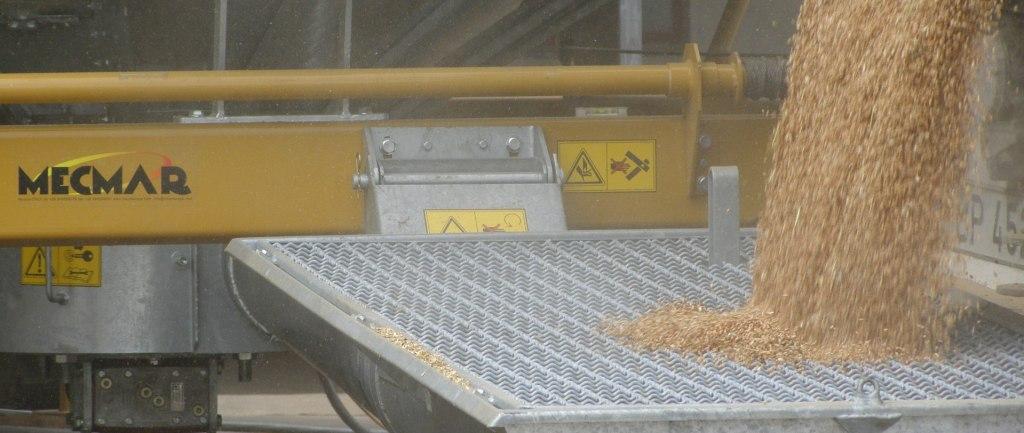
 When sampling grain direct from a Seedarmobile grain drier the first action before collecting the sample should be to purge the sampling chute. This small amount of grain may have been sat in the sampling chute and not recirculated fully. Failure to do this may result in an unrepresentative moisture content reading.
Take three separate samples for testing at the same cereal temperature. Allow the grain a little time to breath before testing. This allows any moisture evaporating from the crop to clear and the temperature of the crop and moisture meter to equilibrate. These three separate samples should give a good indication of the moisture content at a given cereal temperature. If there is significant discrepancy between readings, conduct more sampling and testing until a more consistent trend emerges.
Crop sampled from the drier will have been on or near the outer screens of the drier, testing this grain will generally give a conservative figure for moisture content for the entire batch. Generally, it will be of a slightly higher moisture content than the crop towards inside of the tub. Sampling the crop from the outside of the cylinder gives an increased confidence of achieving the target moisture content through the entire batch. The HGCA research showed that farmers who allowed for a 0.5% safety margin in there moisture readings did not have claims for excess moisture.
Moisture meters
 The HGCA research indicated that both capacitance and resistance meters generally give accurate and consistent results. Although, it was found that capacitance meter readings of freshly dried grain were 0.4% lower than the same samples re-analysed a week later.
We recommend using a resistance meter with coursly ground samples when testing from the grain drier as drying results in an uneven distribution of moisture through the grain and grinding samples ensures that this does not distort the moisture reading.
Moisture probes are useful for quickly monitoring moisture content but do not have the accuracy of a capacitance or resistance meter, we agree with the HGCA that they should not be used in place of meters.
Finally, with all moisture meters it is important to ensure they are correctly calibrated and maintained, ideally this should be completed by the manufacturer.
This advice should help avoid some of the problems relating to taking an accurate moisture content measurement. Taking the time to follow this process for the first batch of a new crop and when significant changes in crop condition are seen will help you get the best from your mobile grain drier and avoid the problems associated with both under and over drying.
21 August 2010 John McArthur Drying Advice Tags: cereal temperature, Drying temperatures, grain sampling, HGCA, moisture content, moisture measurement